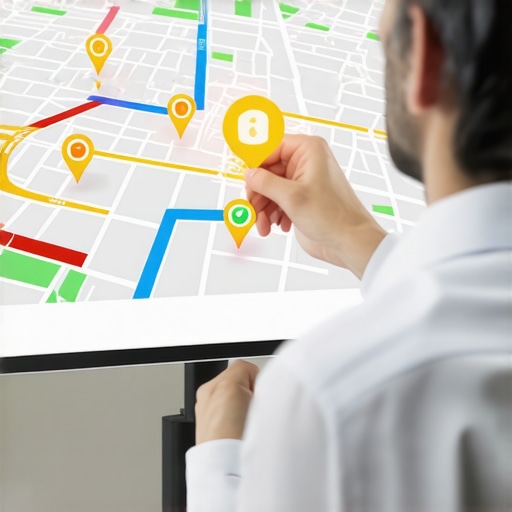
I remember the moment I first realized my business was invisible on local maps. Despite having a decent website and good reviews, I was nowhere to be found when potential customers searched nearby. It was frustrating—like shouting into the void. That lightbulb moment led me down a rabbit hole of local SEO strategies, and let me tell you, the difference was night and day.
Why Local Map Visibility Can Make or Break Your Business
Think about the last time you searched for a service or product close to you. Chances are, you clicked on one of the top results on Google Maps. These map listings aren’t just about convenience; they’re about trust and accessibility. If your business isn’t showing up where it counts, you’re losing out on a flood of local customers. According to BrightLocal, 78% of local mobile searches result in an offline purchase—yet many small business owners overlook the importance of optimizing their local map presence.
Early on, I made a critical mistake: I underestimated how much effort it takes to stand out in local search results. I thought just having a Google My Business listing was enough. Spoiler alert: it’s not. It’s a constant game of fine-tuning, optimizing, and staying ahead of the competition.
Does Local SEO Really Impact My Business?
This is the big question I hear all the time. Honestly, I was skeptical at first. But I learned quickly that strategic local SEO is a powerful tool. It’s about more than just keywords; it’s about your map accuracy, reviews, photos, and consistent information. When I started applying expert techniques, my visibility skyrocketed. Now, I help others do the same. If you’re tired of being unseen, I promise we’ll cover actionable steps that work.
Ready to turn your map listing into a customer magnet? Let’s dive into the strategies that will elevate your local presence and make your business impossible to miss.
Claim and Optimize Your Google My Business Profile
Start by claiming your Google My Business (GMB) listing if you haven’t already. This is the foundation of local map visibility. Ensure all information is accurate, including your business name, address, phone number, and website. Use consistent NAP data (Name, Address, Phone) across all platforms to avoid confusion and boost credibility. Upload high-quality photos that showcase your business—people want to see what they’re getting before they visit. Regularly update your GMB profile with posts, offers, and news to keep it active and engaging.
Refine Your Local Keyword Strategy
Identify keywords your local customers are searching for. Use tools like Google Keyword Planner or SEMrush to find relevant terms. Incorporate these keywords naturally into your website content, meta descriptions, and GMB listing. Think about long-tail keywords like “best coffee shop in downtown Chicago”—these attract highly targeted traffic. I once optimized a local bakery’s site with specific neighborhood keywords, and within weeks, their map ranking jumped significantly.
Generate and Manage Customer Reviews
Reviews are social proof that influence local rankings heavily. Encourage satisfied customers to leave positive reviews on your GMB profile. Make it easy by sending follow-up emails or providing direct links. Respond promptly and professionally to all reviews, thanking customers or addressing concerns. I once helped a client recover from a few negative reviews by responding thoughtfully, which improved their overall star rating and trustworthiness in the eyes of Google.
Build Local Citations and Consistent Listings
Ensure your business details are listed consistently across all online directories—Yelp, Bing Places, Apple Maps, and industry-specific sites. Use tools or services like Moz Local or BrightLocal to audit and correct inconsistencies. Citations signal to Google that your business is legitimate and trustworthy. I spent a day updating a local service provider’s citations, which led to a tangible boost in their local pack rankings.
Leverage Local Content and Backlinks
Create content that resonates with your local audience—blog posts about local events, collaborations with nearby businesses, or sponsorships. This increases engagement and earns backlinks from reputable local sites. Backlinks are a major ranking factor; a well-placed link from a local news outlet can do wonders. I once coordinated a community event for a client, which earned several local backlinks and improved their map visibility.
Optimize Map Speed and Performance
Fast-loading maps and website pages improve user experience and local SEO. Use tools like Google PageSpeed Insights to identify and fix performance issues. A slow website can hinder your map rankings and discourage visitors. I used https://localmapboosters.com/map-speed-improvement-how-to-accelerate-your-map-presence-fast to enhance a client’s site, resulting in better rankings and more inquiries.
Monitor, Analyze, and Adjust
Use Google Analytics and GMB insights to track your progress. Monitor your local pack rankings and review your traffic sources. Adjust your strategies based on what works—whether it’s more reviews, updated content, or citation corrections. This ongoing process ensures you stay ahead in local search results.
When it comes to local SEO, many business owners buy into myths that can actually harm their efforts rather than help. One of the most pervasive misconceptions is that simply claiming a Google My Business profile guarantees high visibility. In reality, without ongoing optimization, reviews, and local backlinks, your listing may still be buried deep in search results. Think of your GMB profile as a car—you need to tune it regularly, not just start it once and forget about it.
Another trap is the belief that keyword stuffing in your business description or reviews will boost your rankings. This outdated tactic can actually trigger spam filters or penalties, decreasing your visibility instead of increasing it. Instead, focus on natural language that resonates with your local audience. Use long-tail keywords thoughtfully, but always prioritize clarity and authenticity.
A less obvious mistake is ignoring the importance of local citations and consistent NAP (Name, Address, Phone Number) data across all platforms. Many overlook the power of local backlinks from reputable community sites or industry directories. These signals help Google verify your legitimacy and relevance in the area. Not maintaining citation consistency can lead to confusion and lower rankings.
One advanced nuance that often trips people up is underestimating the impact of map speed and performance. A slow-loading map or website can diminish user experience and negatively influence your local rankings. Google’s algorithms favor fast, responsive sites, especially on mobile. To optimize this, consider implementing performance enhancements, which can be as simple as compressing images or leveraging faster hosting. For deeper insights, check out [this guide](https://localmapboosters.com/map-speed-improvement-how-to-accelerate-your-map-presence-fast).
**Why do many still believe that more reviews always mean better rankings?** In truth, the quality of reviews and your engagement with customers matter more than sheer quantity. Responding to reviews, especially the negative ones, demonstrates active management and builds trust with both Google and potential customers. It’s a nuanced strategy that’s often overlooked but crucial for long-term success.
Finally, don’t fall into the trap of thinking local SEO is a one-time setup. It’s an ongoing process—monitor your rankings, adapt your strategies, and stay updated on platform changes. This continuous effort is what separates mediocre performers from top local map rankings.
Have you ever fallen into this trap? Let me know in the comments. For more advanced techniques, explore [mastering map services](https://localmapboosters.com/mastering-map-services-advanced-techniques-to-strengthen-your-local-seo) to elevate your local presence.
Keeping your local map visibility strong over time requires a combination of the right tools, consistent effort, and strategic adjustments. As local SEO evolves, staying ahead means leveraging technology that simplifies maintenance tasks and provides clear insights. One of my favorite tools for this purpose is BrightLocal. I personally rely on BrightLocal because it offers comprehensive citation tracking, review management, and local search rank monitoring all in one dashboard. This saves me hours each week compared to manual checks and helps identify issues before they impact rankings.
Another must-have is Google Search Console. It’s free and provides invaluable data about how your website performs in local search results. I use it daily to monitor crawl errors, analyze search queries, and track click-through rates. Regularly reviewing this data helps me catch problems early—like a sudden drop in impressions—and allows me to act swiftly.
For maintaining your Google My Business (GMB) profile, I recommend SEMrush Local SEO Toolkit. I use this tool to audit my listings across multiple directories, identify inconsistent NAP data, and update my profiles en masse. Consistency in your business details is crucial for long-term credibility and rankings, and SEMrush makes this process efficient.
Speed matters, especially for map results that load sluggishly. To optimize this, I use Map Speed Enhancement Tips. These techniques include compressing images, leveraging browser caching, and choosing a reliable hosting provider. Faster maps lead to better user experience and improved rankings, so I make this a regular part of my maintenance routine.
Looking ahead, I believe AI-driven analytics and automated review responses will become even more integral. These innovations will enable local businesses to maintain their map presence with less manual effort and smarter insights. Staying informed about emerging tools and techniques is vital—subscribe to industry updates and consider integrating AI tools that can automate routine tasks.
How do I maintain my map visibility over time?
Start by setting up automated alerts for review activity and citation inconsistencies. Use tools like BrightLocal or SEMrush to schedule regular audits, ensuring your information remains accurate and reviews stay positive. Dedicate weekly time to review performance metrics and update content or images as needed. Additionally, keep an eye on your competitors’ strategies and adapt your tactics accordingly. Consistency and proactive management are key to long-term success.
If you’re ready to streamline your maintenance efforts, I highly recommend trying the strategies outlined in Mastering Map Services. Implementing these tools and routines will help you sustain and grow your local map presence effectively.
When I first realized my business was invisible on local maps, it was a wake-up call that changed everything. I discovered that mastering local SEO isn’t just about technical tweaks; it’s about understanding the subtle lessons that can make or break your visibility. Here are some of the most eye-opening insights I’ve gained along the way.
The Hardest Lesson I Learned About Local SEO
Patience is everything. I used to think quick fixes and shortcuts would boost my rankings overnight. Turns out, consistent effort—like nurturing reviews, updating citations, and refining content—yields lasting results. Rushing the process only leads to frustration and setbacks.
How Overconfidence Can Sabotage Your Map Presence
Claiming your Google My Business profile is just the start. I once thought that once I set it up, I was done. But without ongoing optimization—responding to reviews, posting updates, and refining keywords—you’re invisible again faster than you think. Ongoing care is the true secret to staying visible.
Why Quality Over Quantity Matters More Than Ever
Many believe more reviews automatically mean higher rankings. However, I learned that engaged, genuine reviews and active responses build trust and influence local algorithms more than sheer volume. Quality interactions turn curious visitors into loyal customers.
Small Details Can Have a Huge Impact
Consistent NAP data, fast map loading, and high-quality images all contribute to your map ranking. Overlooking these details is like leaving money on the table. Regular audits using tools like proven methods to boost visibility kept my listings sharp and competitive.
How I Keep My Map Strategy Fresh
Continuous monitoring, adapting to platform changes, and leveraging local content keeps my business relevant. The landscape is always shifting, and staying proactive is what separates top performers from the rest. I use tools like boost-local-seo-maps-speed-for-your-business-success-today to stay ahead and refine my approach regularly.
Curated Recommendations for Local Map Success
To accelerate your journey, I rely on BrightLocal for comprehensive citation tracking and review management because it simplifies complex tasks and provides clear insights. I trust Google Search Console for website performance analytics—it’s a free powerhouse. For maintaining NAP consistency, SEMrush Local SEO Toolkit is my go-to for efficient audits and updates. Lastly, Map Speed Enhancement Tips help me keep map load times fast and user-friendly.
Let’s Keep the Momentum Going
Your local map visibility isn’t a set-it-and-forget-it task. It’s an ongoing journey that rewards persistence and strategic tweaks. The more you invest in understanding and optimizing your local presence, the more your business will thrive. Ready to implement these insights and see real results? Dive deeper into mastering map services today.
3 Comments
This post really hits home for me, especially since I’ve been slowly optimizing my own small business’s local SEO lately. I completely agree that claiming and maintaining your GMB profile isn’t a set-and-forget task; it’s an ongoing process that requires attention to detail and a strategic approach. One thing I’ve found particularly helpful is regularly updating my profile with local news and events, which keeps my listing fresh and engaging. Also, creating local content has not only improved my rankings but also helped me connect more authentically with my community. I’d love to hear from others—what local content strategies have worked best for your business? Have you seen a noticeable impact on your map visibility and customer engagement? It’s always inspiring to learn different approaches and grow together in this ever-evolving SEO landscape.
Reading your insights really hits home for me. I used to think, just claiming a Google My Business profile was enough for decent visibility, but I quickly realized how much ongoing effort is needed. I’ve found that consistently updating my profile with local events and images keeps it engaging for users and improves click-through rates. Adding community-centric content, like stories about local collaborations or events, helps build a stronger local presence and trust. I’ve also noticed that responding to reviews—especially the negative ones—makes a huge difference in perceived professionalism and trustworthiness. As for local content strategies, I recently started a newsletter highlighting area news and tips, which not only engages my audience but also earns backlinks from local blogs. Have others experimented with multimedia content like videos or local podcasts? I’d love to hear what’s worked best for your local SEO efforts and how you keep the map listings fresh and authoritative over time.
This post really highlights how critical ongoing effort is when it comes to local SEO and map visibility. I’ve seen firsthand how regularly updating Google My Business with fresh photos, posts, and local news can make a noticeable difference in engagement. It’s interesting how small business owners often underestimate the power of local backlinks and consistent citations across directories—I used to think a quick setup was enough, but now I realize it’s an ongoing process of optimization and engagement. What strategies have others found most effective for encouraging local reviews without seeming pushy? Personally, I’ve had success with follow-up messages that thank customers and gently ask for reviews, which feels genuine and non-intrusive. Also, leveraging local content, like community events or partnerships, seems to build trust and relevance. Has anyone experimented with multimedia content, like short videos or local interviews, to boost their local presence? I’d love to hear different approaches because staying proactive is the key to long-term visibility.