
Meta Description: Learn how to optimize your HVAC dispatching to dominate Google Maps. From review automation to geo-tagged photos, these 7 fixes drive Top 3 rankings.
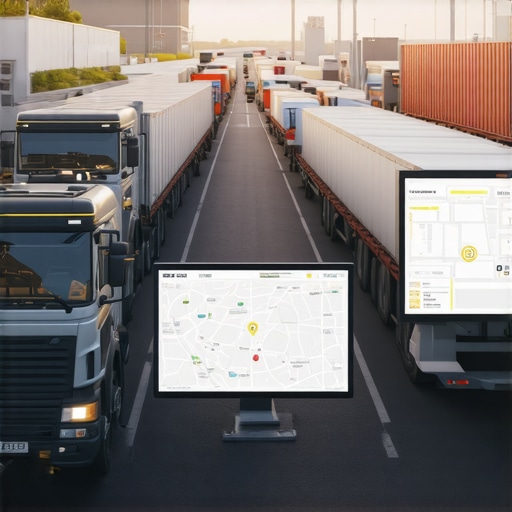
7 HVAC Dispatch Fixes That Put Your Trucks in the Map Pack Top 3
In the high-stakes world of residential HVAC, the difference between a record-breaking month and a struggling one often comes down to a few pixels on a smartphone screen. When a homeowner’s furnace fails in the dead of winter or an AC unit dies during a triple-digit heatwave, they don’t scroll past the first few results. They look at the Google Map Pack. If your business isn’t in those Top 3 spots, for all intents and purposes, you don’t exist to that customer. Dominating google business profile seo is no longer just a “marketing task”; it is the primary engine of modern home services growth.
Consider the case of Kyle from Eco Pro Heating & Cooling. By shifting his focus toward local search dominance and operational alignment, he generated a staggering $360,000 in revenue in just six months. His secret wasn’t a massive billboard budget or expensive TV spots. It was the realization that his dispatch office was actually his most powerful SEO department. By treating every service call as a data point for Google, he was able to outmaneuver much larger competitors with deeper pockets.
The reality is that Google’s algorithm for local search – governed by Proximity, Relevance, and Prominence – is increasingly tied to real-world operational data. If you want to master map services and strengthen your local SEO, you have to stop looking at dispatching and marketing as two separate silos. This guide will walk you through seven critical dispatch fixes that turn your fleet into a ranking machine.
Fix 1: Syncing Dispatch Zones with Service Area Pages
One of the most common mistakes HVAC business owners make is claiming a massive 50-mile service radius on their Google Business Profile (GBP) while only having a physical office in one corner of that territory. To Google, this looks like an overreach. If you don’t have the “signals” to prove you are actually working in those outlying suburbs, you will never rank there.
The fix lies in your dispatch data. Most modern Field Service Management (FSM) software, such as ServiceTitan or Jobber, allows you to pull reports on where your trucks have actually been over the last 12 months. You should use this data to identify high-volume dispatch zones and build dedicated “Service Area Pages” on your website for those specific locations.
This is how hyperlocal seo works in practice. When you create a page for “AC Repair in [Specific Suburb]” and back it up with data showing your trucks are frequently in that zip code, you create a bridge of relevance between your website and your GBP. To manage this effectively, many top-tier contractors utilize specialized local seo software to track their rankings across these specific zones, ensuring that their visibility matches their actual service footprint.
Fix 2: Real-Time Review Velocity via FSM Integration
Reviews are the lifeblood of local search, but it’s not just the total number of reviews that matters – it’s the “velocity.” Review velocity refers to the speed and consistency with which you acquire new feedback. A business that gets 20 reviews in one day and then none for a month looks suspicious to Google’s AI filters. Conversely, a steady stream of daily reviews signals a healthy, active business.
The problem is that many HVAC shops rely on manual processes. A tech might forget to ask, or the office might send a follow-up email three days later. By then, the customer’s “peak excitement” (the moment the air starts blowing cold again) has faded. The fix is to automate review requests the moment a technician closes a job in your FSM. Whether you use FieldEdge, Service Fusion, or BuildOps, the trigger should be the same: Job Status = Complete -> SMS Review Request Sent.
This automation ensures a high review velocity, which is a major google map pack ranking factor. Furthermore, you must prioritize google business profile optimization by responding to every single review. When you respond, you aren’t just talking to the customer; you are feeding Google’s “Prominence” signal. Utilizing tools like google business profile optimization platforms can help you manage these responses at scale, ensuring no customer feedback goes unacknowledged.
Fix 3: Category Alignment (Matching Jobs to GBP Services)
Google’s “Neural Matching” algorithm is incredibly sophisticated. It tries to understand if the services you claim to offer match the intent of the user’s search. A major disconnect occurs when a dispatch office categorizes jobs as “Maintenance” or “Tune-up,” but the GBP only lists “HVAC Contractor” as a primary category. This lack of specificity hurts your “Relevance” score.
You need to audit your GBP categories and services to ensure they perfectly align with your most profitable and frequent dispatch types. If your dispatch logs show that 40% of your summer revenue comes from “Emergency AC Repair,” that exact phrase needs to be a service item under your “Air Conditioning Contractor” category. This helps you rank google business profile for the high-intent keywords that actually drive leads.
Understanding why your business category choice is confusing Google is the first step toward fixing it. Your primary category should be your most broad and important one (usually HVAC Contractor), but your secondary categories should reflect the specialized work your dispatchers are booking every day, such as “Furnace Repair Service” or “Air Filtration Systems.”
Fix 4: Eliminating “Ghost Pins” with Dispatch Response Times
In the eyes of Google, a business that doesn’t answer its phone or has a high “bounce rate” from its GBP listing is a business that shouldn’t be recommended to users. If a customer clicks the “Call” button on your map pin and the call goes to voicemail or stays ringing for 30 seconds, Google tracks that lack of engagement. Over time, this leads to your pin being “ghosted” – it exists, but it’s pushed so far down the rankings that no one sees it.
The fix is operational: you must improve your dispatch response times. This might mean implementing AI front-desk tools that can handle overflow calls, or restructuring your dispatch workflow to ensure a human answers within two rings, 24/7. Google values responsiveness because it wants to provide the best user experience. If you are consistently the business that answers the phone and books the job, Google will reward you with higher visibility.
If you suspect your rankings have dropped despite having good reviews, you may need to perform a quick audit to reclaim your map spot. High responsiveness is one of the most underrated ways to signal to Google that your business is active, reliable, and worthy of the Top 3.
Fix 5: Field-Uploaded Geo-Tagged Photos
Most HVAC companies make the mistake of uploading a few high-quality stock photos of pristine units and calling it a day. However, Google’s AI can easily identify stock imagery, and it provides zero ranking value. What Google wants to see is “proof of work.”
The fix is to make photo uploads a mandatory part of your technician’s closing checklist. Before a tech leaves the job site, they should take one “Job Completed” photo (e.g., a newly installed condenser or a repaired furnace) and upload it directly to the GBP via the mobile app. These photos contain EXIF data – hidden metadata that includes the exact GPS coordinates of where the photo was taken.
When you consistently upload geo-tagged photos from various neighborhoods, you are providing Google with undeniable proof that you serve those areas. This effectively expands your “Proximity” signal. To track how these photos are impacting your reach, you can use google maps seo tools to visualize your ranking heatmaps and see where your “photo-verified” work is moving the needle.
Fix 6: Leveraging Dispatch Data for Local Schema
While the Google Business Profile is the front-facing part of your SEO, your website’s technical backend acts as the foundation. Google’s bots are constantly crawling your site to find data that confirms your GBP information. One of the most powerful ways to do this is through Local Business Schema markup.
You can use your dispatch data to feed “AreaServed” and “Service” properties within your schema code. By explicitly telling search engines which zip codes your trucks visit and what hours your dispatch office is actually booking calls, you make it easier for the AI to categorize your business. This is essentially the schema fix that helps AI bots find your business fast.
Using advanced local seo tools, you can audit your current schema to see if it’s missing critical information like your technical certifications, service area boundaries, or even the brands of equipment your dispatchers prefer to install. The more structured data you provide, the less Google has to “guess” about your business’s relevance.
Fix 7: Proximity-Based Dispatching (The “Near Me” Win)
Proximity remains the #1 ranking factor in the Map Pack. While you can’t move your office closer to every customer, you can influence how Google perceives your “current” location through proximity-based dispatching. When a technician finishes a job in a specific neighborhood and then immediately starts another job two blocks away, their mobile device (with the GBP app or Google-integrated FSM) sends a cluster of location signals to Google.
By optimizing your dispatching to “cluster” jobs in specific neighborhoods on specific days, you create a temporary but powerful boost in your local relevance for those blocks. This is how you win the “near me” war. Instead of having your trucks crisscross the entire city, which dilutes your location signals, a concentrated presence in a suburb tells Google, “This business is the local expert for this specific area right now.”
This strategy requires tight coordination between your dispatch software and your marketing goals. It’s not just about saving gas; it’s about dominating a neighborhood’s search results so that when the next neighbor’s AC fails, you are the only logical choice in the Map Pack.
Conclusion: Operational SEO is the Future
The days of “set it and forget it” SEO are over for the HVAC industry. To stay in the Top 3, google business profile seo must become an operational habit that starts in the dispatch office and ends in the technician’s truck. From automating review velocity to ensuring your trucks are sending the right proximity signals, every operational decision you make has an SEO consequence.
If you implement these seven fixes, you will move beyond the basic optimization that your competitors are doing. You will be feeding Google the real-world, high-velocity data it craves, resulting in more calls, higher-quality leads, and a dominant market position. Don’t let your business pin sit in obscurity. It’s time to stop guessing and start using the tools and strategies that work. Perform a google business profile audit today to see where your dispatching is failing your SEO, or contact Aaron C. for a personalized strategy session to put your trucks at the top of the map.
About the Author
Aaron C. | Home Services SEO Expert
Aaron is the founder of A Visual Glitch, a specialized agency dedicated to helping home service businesses dominate local search results and generate more qualified leads. With years of experience bridging the gap between field operations and digital marketing, Aaron has helped HVAC companies across North America turn their dispatch offices into lead-generation machines. Want more leads? Let’s chat!