Stop Tracking Whole Cities: Why Neighborhood Data Wins the Local SEO War
For years, business owners and marketing managers have been obsessed with a single, deceptive metric: “Are we ranking #1 in [City Name]?” They open a browser, type in their primary service followed by the city, and if they see their name at the top of the Map Pack, they celebrate. But here is the cold, hard truth: that #1 spot is a localized illusion. In the modern landscape of google business profile seo, “ranking in a city” is a myth that is costing you thousands of leads.
The reality is that Google doesn’t rank businesses for entire cities anymore. It ranks them for specific geographic coordinates. You might be the “king” of the three blocks surrounding your office, but move just half a mile into the next neighborhood, and you are effectively invisible. We are no longer fighting a city-wide battle; we are engaged in a “Neighborhood War.” If you aren’t tracking data at the neighborhood level, you aren’t just losing – you’re flying blind.
The Death of the City-Wide Average: Why Your Data is Lying to You
The traditional way of tracking local rankings – checking a single point in a city – is dead. Google’s algorithm has become hyper-sensitive to proximity. Since the “Vicinity” update and the ongoing refinements in 2024 and 2025, the proximity of the searcher to the business has become the #1 ranking factor in the local map pack. This has led to what many experts call the “Ghost Pin” glitch, where a business appears to have a strong google business profile ranking from their own desk, but vanishes the moment they cross a major intersection.
Why is this happening? Google’s goal is to provide the most relevant, convenient result for the user. If someone is searching for a “locksmith” while standing in a specific neighborhood, Google isn’t going to show them a locksmith ten miles away just because that business has more reviews. They want the one three minutes away. This creates a “ranking bubble.” Inside the bubble, you are #1. Outside of it, you might be #20 or lower. If you are asking, “why is my google business profile not ranking” in the suburbs or adjacent districts, it’s because your proximity signals are too weak to pierce through the local competition in those specific areas.
Relying on city-wide averages is like looking at the average temperature of the entire United States to decide what to wear in Seattle. It’s a useless metric. To win, you must stop looking at the city as a monolith and start seeing it as a collection of micro-markets, each with its own competitive landscape and “Local Map Pack” leaders.
Local vs. Hyperlocal SEO: Understanding the 2026 Shift
As we move toward 2026, the distinction between Local SEO and Hyperlocal SEO has become the defining line between growth and stagnation. Traditional Local SEO focused on broad geographic terms – targeting the city and perhaps the county. Hyperlocal SEO, however, zooms in on specific neighborhoods, districts, landmarks, and even street corners.
The shift is driven by consumer behavior. Users are moving away from broad searches and toward high-intent, precise location modifiers. Instead of searching for “Italian restaurant Chicago,” they are searching for “best pasta in Wicker Park” or “pizza near Logan Square.” These hyperlocal searches represent users who are ready to buy now. They aren’t researching; they are navigating.
Research consistently shows that hyperlocal SEO captures buyers with a much higher conversion rate. When a user includes a neighborhood name in their search, they have already filtered out the rest of the city. They want something within their immediate vicinity. To capture this traffic, you need a specialized approach. You can find more on this in our 10-Point Checklist for Dominating Hyperlocal Map Searches. The businesses that dominate in 2026 will be those that have successfully mapped their relevance to these specific “micro-neighborhoods.”
The Secret Weapon: Geo-Grid Tracking and Neighborhood Insights
If you can’t see the problem, you can’t fix it. This is where the “old school” rank trackers fail. They give you a list of keywords and a single number. To win the neighborhood war, you need a visual representation of your “proximity bubble.” This is achieved through Geo-grid tracking.
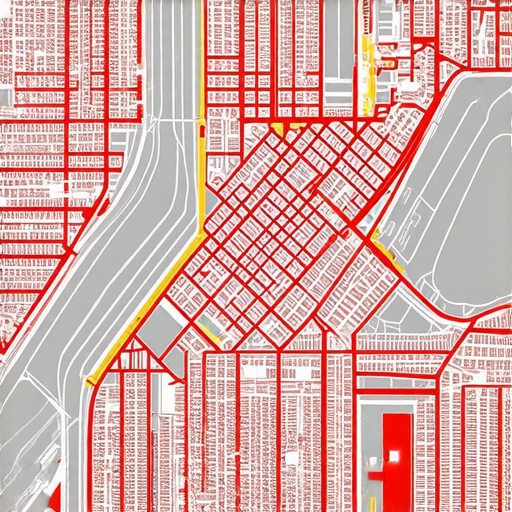
A Geo-grid tracker places a grid over a map and checks your ranking at every single intersection of that grid. It shows you exactly where you are #1 (usually green) and where you drop to #5, #10, or #50 (yellow and red). This visualization is the only way to perform a proper google business profile seo audit. Without it, you are guessing.
To get these insights, you need professional-grade local seo tools. I frequently recommend SEO Viper Tools as a premier google maps rank tracker. It allows you to visualize these ranking bubbles in real-time, showing you exactly where your visibility hits a wall. For example, you might find that your rankings are strong to the North but completely non-existent to the South because of a river, a highway, or a concentrated cluster of competitors. By using a google maps ranking service that utilizes this data, you can stop wasting effort on areas where you already dominate and focus your optimization on the “red zones” where you are losing ground.
These tools replace guesswork with precision. Instead of saying “we need more links,” you can say “we need to build relevance in the West End district because our ranking drops from #2 to #9 the moment we cross 5th Avenue.” That is how you win a war – one block at a time.
How to Optimize for Neighborhood Dominance (The “Neighborhood Hero” Strategy)
Once you’ve identified your weak spots using local seo ranking tools, it’s time to deploy the “Neighborhood Hero” strategy. This isn’t about generic SEO; it’s about signaling to Google that you are a vital part of a specific community. Here is how you do it:
1. Neighborhood-Specific Content
Stop writing generic blog posts about “Tips for Homeowners.” Start writing about “How to Maintain Historic Homes in [Neighborhood Name].” Mention local landmarks, specific parks, and even well-known street intersections in your Google Business Profile (GBP) posts. When Google’s “Neural Matching” sees your business associated with these hyperlocal entities, it strengthens your relevance for those specific coordinates.
2. Geo-Targeted Reviews
Reviews are a massive part of local seo ranking factors, but not all reviews are equal. A review that says “Great service!” is good. A review that says “Best plumber in [Neighborhood Name], they arrived at my house near [Local Landmark] in ten minutes!” is gold. Encourage your customers to mention their neighborhood or nearby landmarks in their reviews. This provides Google with authentic, user-generated geo-signals.
3. Hyperlocal Backlinks
Forget about high-DR guest posts from national sites for a moment. If you want to rank in a specific neighborhood, you need links from that neighborhood. Sponsor a local Little League team, get listed on a neighborhood association website, or partner with a local charity. These “hyper-local” links are incredibly powerful for google business profile optimization because they are geographically relevant, which is often more important than “authority” in the Map Pack.
Implementing these tactics helps you rank higher on google maps by expanding your proximity bubble. You are essentially telling Google, “I don’t just exist in this city; I am a cornerstone of this specific neighborhood.” For more advanced tactics, check out our guide on 7 Map Presence Boost Secrets for 2026 Neighborhood Clicks.
AI Search and the Future of Neighborhood Context
The rise of AI search engines like Gemini, Perplexity, and Search Generative Experience (SGE) is making neighborhood data even more critical. These AI models don’t just look at keywords; they use “Neural Matching” and street-level data to answer complex, conversational queries. When a user asks an AI, “Where is a quiet coffee shop near the library with good Wi-Fi?”, the AI is looking for deep context.
If your business profile and website only mention the city name, the AI won’t have enough context to recommend you for that specific query. However, if your data includes mentions of being “two blocks from the Central Library” or “located in the historic Arts District,” you become the primary candidate. This is why choosing the right business category and providing neighborhood context is essential. The AI needs to understand your physical relationship to the world around you, not just your industry.
In 2026, the search experience will be less about a list of links and more about a curated recommendation. To be the business that the AI recommends, you must be the “Neighborhood Hero.” You must provide the level of detail that allows an AI to understand exactly where you are and what is around you.
Conclusion: Winning the War One Block at a Time
The “City” is a concept for maps; the “Neighborhood” is where people live, shop, and spend their money. If your SEO strategy is still focused on city-wide averages, you are leaving the door wide open for your competitors to steal your local leads. You cannot win the city all at once. You win by dominating one neighborhood, solidifying your presence, and then strategically expanding your “proximity bubble” into the next.
The three pillars of the local algorithm – proximity, relevance, and prominence – all point toward a hyperlocal future. Users are no longer looking for the best business in the state; they are looking for the best business “near me.” To capture that intent, you need the right data and the right tools.
Stop guessing and start growing. Use a google business profile audit tool to see where you actually stand today. If you are ready to stop being a “ghost” in your own city and start dominating the Map Pack, contact Local Map Boosters for a custom hyperlocal strategy. We don’t just help you rank; we help you win the neighborhood war.
For more advanced tracking and to see your ranking grid today, check out SEO Viper Tools, the industry-leading google maps ranking service for serious local businesses.