Why Your Phone Isn’t Ringing Even Though Your Map Pin is Visible
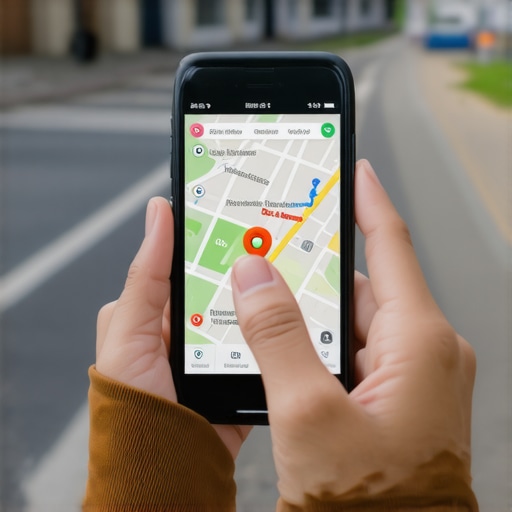
It is the ultimate frustration for a local business owner. You open Google Maps, type in your business name or your primary service, and there it is – your bright red pin, sitting exactly where it should be on the map. You log into your dashboard and see hundreds, perhaps thousands, of “views.” On paper, you are visible. In reality, your phone is silent, your contact forms are empty, and your lobby is quiet. This disconnect is what we call the “Visibility-Conversion Gap.”
Many entrepreneurs and marketing managers fall into the trap of believing that “being on the map” is the finish line. They assume that if Google shows their business, customers will naturally follow. However, in the modern landscape of google business profile seo, visibility is merely the entry fee. To actually generate revenue, you must move beyond mere presence and focus on being the most compelling choice among a sea of competitors. Appearing on the map is a technical achievement; getting the call is a psychological one. To bridge this gap, you need to understand that google business profile seo is about more than just appearing; it’s about being chosen. If you want to start optimizing for more than just views, you should first look at how to Enhance Your Map Listings: Proven Methods to Boost Visibility Today.
The “Visibility Trap”: Understanding Views vs. Intent
The first thing we need to address is the data in your Google Business Profile (GBP) dashboard. It is very easy to get intoxicated by high “view” counts. However, according to research from GMBPro and industry benchmarks, views are often a “vanity metric.” A view is recorded whenever your business profile appears on a user’s screen, even if they were just scrolling past to find someone else. It represents exposure, not necessarily performance or interest.
One of the most common issues discussed in the Local Search Forum is the “Red Pin Dilemma.” Business owners often complain that their pin only appears when they zoom in significantly or search for their exact business name. This is a symptom of low algorithmic authority. Google uses “Place Labels” – those little icons you see on the map without searching – to highlight businesses it deems most relevant to the general public. If your pin is only visible under specific, narrow conditions, you aren’t truly “visible” to the high-intent customers who are ready to buy.
If you don’t rank google business profile for high-intent keywords – terms like “emergency plumber near me” or “best criminal defense lawyer” – you are essentially digital wallpaper. You exist, but you aren’t part of the consumer’s decision-making process. High-intent searches are the lifeblood of local business, and if your visibility is tied to low-intent or informational searches, your phone will stay silent regardless of your view count.
The 3 Pillars of Google’s Local Algorithm
To understand why a visible pin isn’t converting, we must first understand how Google decides to show that pin in the first place. According to official Google Support documentation, local rankings are determined by three primary factors: Relevance, Distance, and Prominence.
1. Relevance
Relevance refers to how well a local business profile matches what someone is searching for. This is where google business profile optimization comes into play. If your profile is vague or missing key service descriptions, Google won’t “trust” that you can solve the user’s problem. For example, if someone searches for “water heater repair” and your profile only says “Plumber,” you might be visible for general searches but invisible (or non-converting) for specific, high-value ones.
2. Distance
Proximity is a major factor, but it is often the one business owners over-rely on. While Google tries to show results near the user, it will frequently “bypass” a closer business to show a more authoritative one further away. If you are relying solely on your physical location to get calls, you will lose to competitors who have invested in their digital prominence.
3. Prominence
Prominence is a measure of how well-known a business is. Google pulls this data from across the entire web – links, articles, directory listings, and even mentions in local news. This is why we focus so heavily on authority signals. A business with a massive digital footprint will always out-convert a “quiet” business with a visible pin. For a deeper dive into this, read Why These Authority Signals are Dominating Local Search Rankings in 2026.
5 Reasons Your Visible Pin Isn’t Converting
If you have checked the boxes for the three pillars but the phone still isn’t ringing, the problem likely lies in your “Conversion Factors.” Here are the five most common reasons a visible pin fails to generate leads.
1. Weak Trust Signals (The Rating Gap)
In 2025 and moving into 2026, the “threshold of trust” has shifted. A few years ago, a 4.0-star rating was acceptable. Today, consumers are hyper-discerning. If you have a 4.1-star rating and your competitor has a 4.8, the user doesn’t care if your pin is closer or more visible – they are calling the 4.8. High numerical ratings (4.5 – 5.0) are no longer optional; they are a prerequisite for conversion. Furthermore, the recency of reviews matters. If your last review was from six months ago, customers wonder if you are still in business or if your quality has slipped.
2. Inactive Profiles (The “Ghost Town” Effect)
When a user clicks on your pin, they are looking for signs of life. If your “Updates” section is empty, your photos are three years old, and you haven’t answered any Q&As, your profile looks like a ghost town. Regular Google Business Profile Posts are a signal to both Google and the consumer that you are active, reliable, and open for business. An inactive profile reduces consumer confidence instantly.
3. Poor Service Clarity
The “2-Second Rule” applies to Google Maps just as much as it does to websites. If a user clicks your profile and cannot tell exactly what you do and how to hire you within two seconds, they will bounce back to the map. Many businesses fail to use the “Services” menu effectively, leaving users to guess whether the business handles their specific needs. You must clearly define your offerings to convert a viewer into a caller.
4. Missing or Mismatched Phone Trust Signals
If your phone number isn’t easily clickable, or if it looks like a generic tracking number that doesn’t match the local area code, users may hesitate. Furthermore, Name, Address, and Phone (NAP) consistency across the web is still a vital trust signal for Google’s algorithm. If Google detects conflicting information about your contact details, it may suppress your “Call” button functionality or lower your ranking in favor of a more “stable” looking business. Using professional local seo tools can help you audit these signals across the web.
5. The “Ghost Pin” Glitch of 2026
A more technical issue we’ve seen recently is the “Ghost Pin” glitch. This occurs when a business appears as a dot on the map, but when a user clicks it, the knowledge panel (the sidebar with your info) fails to load or shows an error. This is often caused by map data conflicts or a “suspended” state that hasn’t fully reflected in the UI. If your customers are seeing your pin but can’t see your details, your conversion rate will be zero. You can learn How to Outrank Local Rivals Who Have Hundreds of Reviews by ensuring your technical foundation is flawless.
Advanced Optimization: Beyond the Basics
Once you’ve fixed the conversion leaks, it’s time to move from a standard gmb ranking service to a comprehensive local dominance strategy. This involves understanding the cutting-edge ways Google is processing local information.
AI & Neural Matching
Google now uses neural matching to understand the “intent” behind a search rather than just the keywords. This means that if someone searches for “fix leaky faucet,” Google knows they need a plumber even if the word “plumber” isn’t in the search query. To win here, your profile needs to be rich with semantic context. Don’t just list your services; describe the problems you solve. For more on this, check out How to Optimize Your Business for Neural Matching Without Stuffing Keywords.
Voice Search and “Ask Maps”
With the integration of Gemini AI into Google Maps, users are increasingly using conversational queries like “Which Italian restaurant nearby is best for a quiet date?” Google’s AI scans your reviews and your “Attributes” to find the answer. If your reviews mention “quiet atmosphere” or “great for dates,” you will be cited as the top recommendation. This is the new frontier of google maps seo – optimizing for AI-driven recommendations rather than just a list of results.
The Importance of Schema Markup
While GBP is a standalone platform, it draws significant authority from your website. Implementing LocalBusiness Schema markup on your site helps AI bots verify your data instantly. This cross-verification is a massive boost to your prominence. If you haven’t done this, look into The Schema Fix That Helps AI Bots Find Your Business Fast.
The Solution: A Conversion-First Map Strategy
If you want to stop staring at a silent phone, you need to pivot your strategy. Stop asking “How can I get more views?” and start asking “How can I be the obvious choice for the person who sees me?”
Here is your actionable checklist for a conversion-first map strategy:
- Audit Your Profile: Use a google business profile audit tool to identify missing information, low-quality images, or category mismatches.
- Optimize Categories and Services: Ensure your primary category is your most profitable service, and use secondary categories to capture related searches.
- Implement a Review Strategy: Don’t just wait for reviews; actively solicit them. Focus on getting reviews that mention specific services and locations. Understand how Google Maps reviews actually influence your local AI search rank to maximize their impact.
- Leverage Visual Content: Upload high-resolution photos of your team, your office, and your completed work at least once a week.
- Track Real Data: Use local seo software to track actual phone calls, clicks to your website, and direction requests. These are the only metrics that truly matter.
By shifting your focus to these high-impact areas, you move your business from being a “pin on a map” to being a local authority. This is the essence of Mastering Map Services: Advanced Techniques to Strengthen Your Local SEO.
Conclusion: Don’t Settle for Digital Wallpaper
In the world of local business, visibility is the start, but conversion is the goal. A visible pin that doesn’t generate calls is a wasted opportunity. By addressing the “Visibility-Conversion Gap” – fixing your trust signals, clarifying your services, and embracing the AI-driven future of search – you can ensure that when people see your business on Google Maps, they don’t just scroll past. They click. They call. They buy.
Don’t let your competitors take the leads that should be yours. If you are ready to turn your map presence into a lead-generation machine, contact us today for a comprehensive google maps seo audit. Our team specializes in bridging the gap between being seen and being hired. Visit our Contact Us page to get started.