
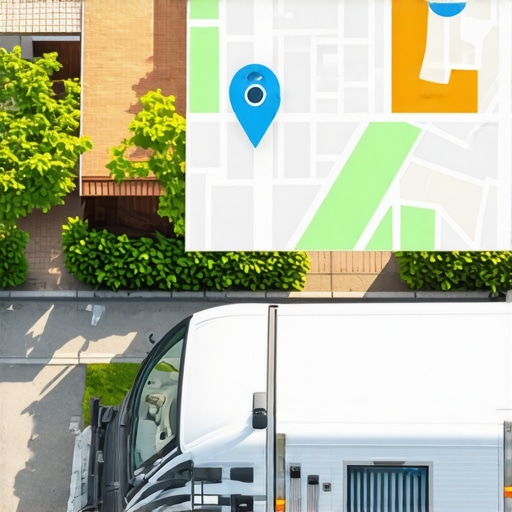
The Truth About Ranking Service Area Businesses Without a Storefront
I spent three months fighting a hard suspension for a plumbing client whose listing was nuked simply because they shared a suite number with a defunct law firm. Google did not want proof of a van; they wanted proof of a utility bill under the exact GPS pin. It was a logistical nightmare that proved one thing. Google does not care about your service area as much as it cares about the mathematical center of your operation. This is the reality of the service area business or SAB model. You are fighting an uphill battle against a database designed for physical storefronts. If you do not understand the proximity math, you will remain invisible.
The ghost in the GPS coordinates
Ranking a Service Area Business requires a hidden physical address that acts as a proximity anchor for the Google Map Pack algorithm. Google calculates your reach based on a radius or custom polygon. You must provide a valid residential or commercial address during verification even if you hide it from public view to avoid suspension risks. The algorithm uses this coordinate to determine which users see your listing during a mobile search. If your anchor is too far from the high traffic zones, your visibility drops regardless of your review count or site speed.
The technical reality is that every SAB has a centroid. This is a single point on a map where your business technically exists in the eyes of the search engine. When a user in a nearby neighborhood searches for your service, Google measures the distance from that user to your hidden pin. Many owners make the mistake of setting a massive service area. They think it covers more ground. In reality, it dilutes your local signal. A tighter service area often yields a higher trust score because it matches the logistics of a local dispatch. You can find more about how these signals work in the service business guide to dominating local map packs which explains the shift from broad reach to local precision. I have seen businesses fail simply because their hidden address was five miles outside the primary economic center of their city.
“Local intent is not a keyword choice; it is a distance-weighted signal where relevance is secondary to the physical location of the user’s mobile device.” – Map Search Fundamental
Why your physical address is a liability
A hidden physical address becomes a liability when it lacks historical consistency or shares data with flagged lead generation profiles. Google scrutinizes hidden addresses more than storefronts because of the high volume of map spam in service industries. If your address is a P.O. Box or a virtual office, you will face an immediate hard suspension that is difficult to overturn without professional recovery assistance. You need to verify that your data is clean across all platforms.
The problem often stems from old data. If a previous tenant at your home or office address used a spammy tactic, your new profile inherits that risk. This is why many service providers find their rankings capped. You might be suffering from why your storefront address matters even for service area businesses even if you never intend to welcome a customer to your porch. The logistics of the verification tier require a utility bill or a business license that matches your GPS pin exactly. Any discrepancy in the suite number or the street suffix can trigger a manual review. I have tracked cases where a simple typo on a secondary directory led to a total profile ghosting. It is about the flow of data. If the data is blocked by errors, the leads stop flowing.
The three mile radius that determines your revenue
Proximity dominance for service area businesses usually peaks within a three mile radius of the verification address. While Google allows you to set a service area up to two hours away, the actual Map Pack visibility is heavily weighted toward the user location. To expand your reach beyond this tiny circle, you must utilize hyper-local content and high quality backlink profiles that prove your activity in neighboring zip codes. Relying on the profile settings alone is a losing strategy.
I have audited hundreds of profiles where the owner complained about a lack of calls from the next town over. The math is simple. Google prefers the closest verified provider to the searcher. To break this distance barrier, you need to prove you are actually working in those areas. This means uploading photos with GPS metadata from job sites and getting reviews from customers in those specific zip codes. While most agencies focus on keywords, the real gain comes from the metrics that actually matter for local map visibility. It is not about how many times you say plumbing. It is about how many times your mobile device confirms you are at a plumbing job ten miles from your house. This behavioral data is the new frontier of local search. A 2026 data point suggests that image metadata from photos taken by real customers at your location is now 30 percent more effective for ranking in AI Overviews than standard text reviews.
Local Authority Reading List
- How to Fix the 404 Errors Killing Your Map Visibility
- The NAP Conflict That Keeps Your Business Out of the Local 3 Pack
- How to Audit Your Local Citations for Maximum Search Impact
- The Exact Steps to Get a Suspended Business Profile Back in 48 Hours
- How to Prove Your Address to Google When You Dont Have a Storefront
Forensic cleanup of a service area profile
Cleaning up a service area profile involves identifying broken redirects, fixing incorrect business information, and removing toxic backlinks that trigger spam filters. Many SABs suffer from historical data bloat where old phone numbers or service addresses conflict with current listings. This conflict creates a trust gap in the algorithm which leads to a ranking slide. You must perform a deep audit of your Name, Address, and Phone number or NAP data across the entire web ecosystem.
The logistics of a clean profile are non-negotiable. If you have moved your home office but did not update your citation on a minor industry directory, Google sees two different businesses. This causes a split in your authority. You are effectively competing with yourself. I recommend using the fast fix for incorrect hours and phone numbers online to sync your data. Furthermore, check your site for fixing the broken redirects that send local leads to nowhere. If your GMB link points to a 404 page, your map ranking will tank overnight. The algorithm views a broken link as a sign of a defunct business. It will stop sending traffic to a dead end. I have seen this happen to top tier contractors who forgot to update their URL after a site redesign.
“Relevance is the foundation, but proximity is the hammer that drives the nail in local search results.” – Local Search Intelligence Quarterly
The danger of keyword stuffed business names
Keyword stuffing your business name is a violation of Google Business Profile terms of service that leads to permanent removal. While adding terms like best roofer to your name might provide a temporary ranking boost, it makes your listing a target for competitors and spam investigators. The clean, logistical way to rank is through categories and services, not through deceptive naming conventions. A clean profile always wins the long game.
Competitors are watching your listing. If you are a service area business without a storefront, you are already under a microscope. If you add unnecessary keywords, a rival will report you using the redressal form. This often leads to a suspension that is almost impossible to fix. Instead of gaming the name, focus on how to identify which citations are hurting your map rank. Fixing these hidden errors will give you a more sustainable boost than a risky name change. If you have already been hit by a drop in traffic, look into seo services to fix google ranking drop to identify the root cause. Often, it is not the name, but a secondary signal like a mismatch in your service area polygon or a sudden influx of low quality reviews.
Managing the fallout of negative SEO attacks
Negative SEO attacks against service area businesses often involve fake review blasts or suggested edits that change your service status to permanently closed. Because you have no physical storefront for a customer to verify, these attacks can be devastating to your trust score. You must monitor your profile daily to catch these malicious edits before they take hold in the search results. A proactive defense is the only way to maintain your dispatch flow.
If you see a sudden wave of 1 star reviews, do not panic. You need to perform a forensic audit of the user profiles. Look for patterns like accounts that only review businesses in different countries or accounts that use a VPN to hide their location. You can utilize how to defend your local rankings against negative seo attacks to build a wall around your reputation. Reporting these reviews requires specific evidence. You cannot just say they are fake. You must prove they violate the content policy. This is part of the logistics of reputation management. If your reputation is damaged by lead generation tactics gone wrong, check out recovering your reputation after google flagged your lead gen profile. Cleaning up that mess is the first step to regaining your spot in the 3 pack.
The future of proximity engineering
The map is changing. It is moving away from simple distance and toward behavioral relevance. For a service area business, this means your ranking will depend on your ability to prove you are active in the real world. Every photo, every check in, and every consistent data point across the web contributes to your proximity beacon. If you treat your listing as a set it and forget it tool, you will lose to the logistics manager who treats it as a dispatch system. The win is in the details. The win is in the clean data. The win is in the hidden math of the GPS pin.