
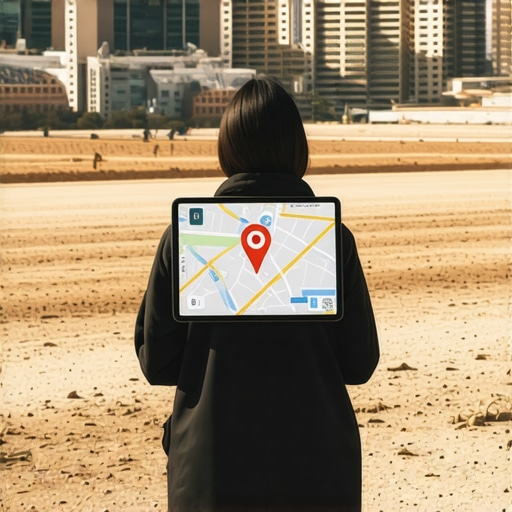
The hidden math of mismatched address data and lost map pack leads
I spent three months fighting a hard suspension for a plumbing client whose listing was nuked simply because they shared a suite number with a defunct law firm. Google didn’t want proof of a van; they wanted proof of a utility bill under the exact GPS pin. The detective work required examining the building original permit to show that Suite B was a legitimate entrance. This experience taught me that the local algorithm does not forgive ambiguity. When your address data is mismatched, you are not just invisible; you are a liability to the search engine trust score.
The ghost in the GPS coordinates
Mismatched addresses create data fragmentation that confuses the Google Knowledge Graph and triggers the spam filter. When your Latitude and Longitude coordinates do not align with your NAP data across the ecosystem, the algorithm loses confidence in your physical existence. This leads to pin flickering and lost rankings. I have seen businesses lose their entire livelihood because a single directory listed them as Street instead of Avenue. This small discrepancy creates a second entity in the eyes of the machine. You must stop the lead bleed by ensuring every character of your physical location is identical across the digital world. The algorithm uses a proximity weight where every millimeter of distance from the centroid matters. If your data sends the pin to the middle of an intersection instead of your front door, you will never win the 3-pack. The physics of local search dictates that proximity is the primary filter. Your mobile device broadcasts a location signal that Google compares against your business profile. If these two points do not overlap, the trust signal dies. It is a mathematical certainty. You can find more about this in our toolkit for fixing broken map profiles where we break down the coordinate alignment process.
Why your physical address is a liability
A physical address becomes a liability when it is associated with previous business failures or shared office spaces that lack distinct signage. Google uses computer vision and historical data to verify storefronts. If another entity used your suite for spam, your profile inherits that toxic history. I remember a cafe that couldn’t rank because the previous tenant was a locksmith who had been banned for review manipulation. The address itself was flagged. To fix this, you must clean up bad citations before you attempt any aggressive ranking strategy. The logistics of the map pack are unforgiving. If you are a service area business, you might think you are safe, but why your service area business pin disappeared is often related to the address you tried to hide. Google still needs a verified home base. Without a clear anchor, the proximity radius shrinks to zero. This is the microscopic reality of spatial data. You are a beacon in a sea of noise. If your signal is weak, the neighborhood simply forgets you exist. We often suggest that clients audit their local presence to catch these risks before a core update wipes them out.
“Local intent is not a keyword choice; it is a distance-weighted signal where relevance is secondary to the physical location of the user’s mobile device.” – Map Search Fundamental
The three mile radius that determines your revenue
Proximity is a distance-weighted signal where the algorithm prioritizes the physical location of the user mobile device over all other factors. In hyper-competitive niches, your ranking radius may be as small as three blocks. Understanding the math of the centroid is vital for local dominance. The algorithm calculates the distance from the searcher to your verified pin and applies a decay function. If your address is mismatched, this calculation breaks. You need the pros toolkit for dominating local search to visualize where your rankings fall off. I have used heat maps to show clients that they rank at their front door but disappear at the end of the block. This is often because of fixing the nap errors that are scattered across low-quality directories. The digital footprint you leave behind must be clean. A single mismatched phone number can be as damaging as a wrong address. It creates a conflict in the secondary verification tier of the local algorithm. You should merge duplicate profiles immediately if you find them, as duplicates are the primary cause of proximity collapse.
Local Authority Reading List
- Accelerate your map presence fast
- The audit checklist for hidden visibility killers
- Why businesses in the same building are grouped together
- How to get more leads from your profile
Tools to fix low gmb rankings and the manual truth
Software can identify the symptoms of a ranking drop, but human intervention is required to fix the underlying data corruption. Most automated tools miss the subtle address nuances like secondary unit designators. Manual audits are the only way to ensure total compliance with Google terms. I see agencies selling expensive subscriptions for tools that fail to move the pin because they don’t understand the forensic side of the map pack. You need a step by step gmb ranking toolkit that focuses on the fundamentals. The real secret is in the behavioral signals. When a customer takes a photo at your shop, the image metadata includes GPS coordinates. Google uses this to verify your address. It is a crowdsourced verification loop. If your address is wrong on your website but correct on your profile, the discrepancy will eventually trigger a suspension. You must fix your leaky website to prevent these technical conflicts. Every page on your site should point to the same physical truth. This is the core of local SEO.
Reputation management and review repair services for the cynical
Review sentiment and local justifications are now integrated into the proximity filter, meaning a high rating can slightly expand your ranking radius. However, fake reviews are a fast track to a permanent ban. Review repair requires a forensic approach to identify and remove spam. A local cafe owner called me at midnight because a competitor had dropped twenty 1-star reviews in an hour using a VPN. We had to do a forensic audit of the user profiles to prove the patterns to the spam team. This is why recovering your map rank after a manual action is so difficult. You need a strategy for softening your over-optimized profile and building real trust. Google can tell if a reviewer has actually been to your location. They track the location history of the user. If a person in London reviews a plumber in Los Angeles without ever leaving their house, the review is flagged. This is the level of detail you are dealing with. It is not about the number of stars anymore; it is about the legitimacy of the signal. You should optimize for calls instead of just views to prove to Google that you are a real business serving real people.
“Proximity is the strongest ranking signal in the local algorithm, and it is the one factor that a business cannot optimize with keywords alone.” – Location Intelligence Research
Local seo services to fix banned gmb listing issues fast
Reinstating a suspended profile requires a precise document trail that proves your physical operation at the listed address. Google requires utility bills, lease agreements, and storefront photos that match the digital data. Any mismatch in this phase results in a denied appeal. If you find yourself in this situation, you need the exact steps to get a profile back. I have seen businesses try to hide their home address only to find their impressions vanish. Transparency is the only way to survive the 2024 algorithm updates. You must be able to prove your address without a storefront if you are an SAB. The suspension checklist is long and unforgiving. If your phone number is mismatched across citations, fix it now. Use our guide on phone number cleanup to start. The machine is watching your every move. It knows when you change an address. It knows when you buy fake links. It is time to play by the rules and build a proximity beacon that lasts.
[image_placeholder_1]