
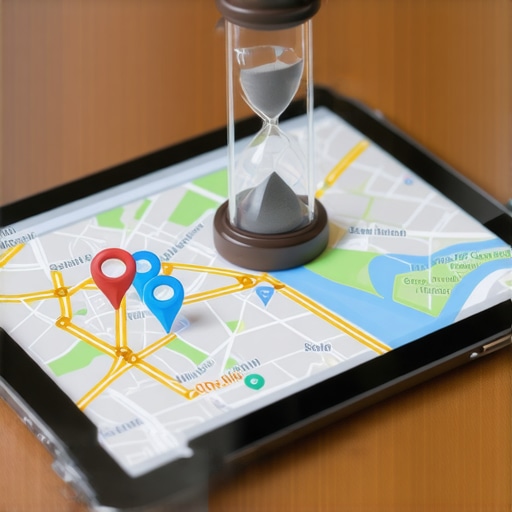
I walk through the city when the rain is still fresh on the pavement, smelling that sharp scent of wet concrete and ozone. To most, a storefront is just brick and glass. To me, it is a coordinate in a spatial database, a Proximity Beacon that must broadcast a perfect signal to survive. I see the glitches others miss. I see the faded ‘Grand Opening’ sign on a shop that the Google Business Profile claims is permanently closed. These discrepancies are not just minor errors; they are the forensic traces of a dying rank. Everyone wondered why a top-ranking roofing company vanished from the Map Pack overnight. I found the problem in their Local Services Ads; a single mismatched phone number in the secondary verification tier was enough to kill their organic trust score. It was a Centroid Collapse. The algorithm saw the conflict between their LSA data and their primary listing and decided the business was no longer a safe bet for the user. Local intent is not a keyword choice. It is a distance-weighted signal where relevance is secondary to the physical location of the user’s mobile device. If your data is messy, your pin disappears. The pin moved. The trust evaporated. It took weeks to trace the ghost in the machine back to a set of inconsistent opening hours from three years ago that still lived in an obscure directory.
The ghost in the historical data
Google Business Profile maintains a ledger of every edit made to your operation hours. Frequent changes or conflicting data across the web signal instability to the local algorithm. This creates a trust gap that suppresses your ranking in the Map Pack because Google prioritizes reliability for its users above all other metrics. When you constantly toggle your hours to chase seasonal trends without a clear strategy, you leave a trail of digital breadcrumbs that suggest your business is unreliable. The local algorithm is an engine of certainty. It wants to know with one hundred percent confidence that if it sends a driver to your door at 4 PM on a Tuesday, that door will be unlocked. If your historical data shows you have changed those Tuesday hours four times in the last year, your ‘certainty score’ drops. We often use [the most reliable tools for auditing your local map health](https://localmapboosters.com/the-most-reliable-tools-for-auditing-your-local-map-health) to find these hidden conflicts. These tools reveal how Google sees your history, not just your current profile. You might think the update you made yesterday fixed everything, but the search engine is still weighing the baggage of your past. I have seen listings ghosted simply because their ‘Holiday Hours’ from two years ago never matched their actual closing times. This is why [how to audit your opening hours history for ranking bottlenecks](https://localmapboosters.com/how-to-audit-your-opening-hours-history-for-ranking-bottlenecks) has become a core part of any high-level forensic audit. It is about cleaning up the digital debris that clogs the engine.
The three mile radius that determines your revenue
Proximity is a distance-weighted signal where the physical location of a user relative to a verified business address dictates visibility. If your hours history suggests you are closed or unreliable during peak search times, Google shrinks your proximity radius to prevent poor user experiences and protect its own brand reputation. The math is simple but brutal. If the algorithm loses faith in your schedule, it will only show your listing to people standing within a few blocks of your front door. It will not risk showing you to someone five miles away if there is a chance they will arrive to find a ‘Closed’ sign. This is the ‘Proximity & Behavioral Zooming’ effect. You see your ranking drop, but you do not see the geometric contraction of your visibility zone. To fight this, you need [local seo tools to optimize google business profile listing](https://localmapboosters.com/the-software-agencies-use-to-automate-local-rank-tracking) accuracy across every single touchpoint. It is not enough to be ‘Open’ on your profile; you must be ‘Open’ in the eyes of every data aggregator that feeds into the local ecosystem. I have watched businesses struggle with [the nap conflict that keeps your business out of the local 3-pack](https://localmapboosters.com/the-nap-conflict-that-keeps-your-business-out-of-the-local-3-pack) for months, never realizing that their old, unoptimized hours on a Yelp page from 2018 were the anchor dragging them down. The algorithm treats these old citations as proof of a ‘mismatched identity.’
“Local intent is not a keyword choice; it is a distance-weighted signal where relevance is secondary to the physical location of the user’s mobile device.” – Map Search Fundamental
Local Authority Reading List
- [Fixing 404 errors that tank local rank](https://localmapboosters.com/a-no-nonsense-guide-to-fixing-404-errors-that-tank-your-local-rank)
- [The toolkit for beginners getting started with Map SEO](https://localmapboosters.com/the-toolkit-for-beginners-getting-started-with-map-seo)
- [How to reclaim your rank after a profile drop](https://localmapboosters.com/how-to-reclaim-your-rank-after-a-google-business-profile-drop)
- [Cleaning up old hours data for trust scores](https://localmapboosters.com/cleaning-up-old-hours-data-to-improve-user-trust-scores)
- [The specific move to restore traffic after an update](https://localmapboosters.com/the-specific-move-to-restore-traffic-after-a-massive-search-update)
Why your physical address is a liability
An address is more than a location; it is a primary key in Google’s spatial database. If that key is associated with inconsistent operating hours or frequent suspensions, the physical location itself becomes a ‘toxic’ entity that requires a deep forensic cleanup to restore its original ranking power. I despise ‘address rentals’ and agencies that use virtual offices. Google’s AI can now detect the difference between a real commercial storefront and a coworking space by analyzing the ‘behavioral footprints’ of the mobile devices that enter and exit the building. If your hours say you are open 24/7, but the GPS data shows no human activity at that coordinate after 6 PM, you are triggering a spam flag. This is why [why your storefront address matters even for service area businesses](https://localmapboosters.com/why-your-storefront-address-matters-even-for-service-area-businesses) is a conversation we have with every client. The system tracks the ‘heartbeat’ of the location. If the heartbeat does not match the schedule, the profile is flagged for a manual review or a hard suspension. If you are dealing with [local seo services to fix gmb hard suspension for service area business](https://localmapboosters.com/how-we-fixed-a-service-area-business-after-a-hard-google-suspension), the first thing we look at is the delta between your stated hours and your actual business activity. We use [google business profile seo tools for agencies](https://localmapboosters.com/the-tools-professional-seos-use-to-monitor-map-rankings-24-7) to monitor these signals around the clock. The goal is to create a profile that is indistinguishable from a perfectly run local merchant.
The forensic trace of a service area polygon
Service Area Businesses (SABs) face a unique challenge where the lack of a physical storefront makes historical data the only way for Google to verify legitimacy. Inconsistent hours in an SAB profile often lead to immediate shadow penalties that hide the business from all but the most specific searches. When you hide your address, you are asking Google to trust you on your word. That trust is fragile. If you have a history of [fixing the impression drop after setting your business to service area only](https://localmapboosters.com/fixing-the-impression-drop-after-setting-your-business-to-service-area-only), you know how quickly things can go south. The algorithm looks for ‘Local Justification Triggers.’ These are reviews that mention you arrived on time or photos taken by customers that have embedded GPS metadata. If a customer posts a photo of your van at 10 AM, but your hours history says you were closed at that time, you have a conflict. This is the microscopic math of the local layer. You need [emergency seo services for sudden ranking drop](https://localmapboosters.com/how-to-reclaim-your-rank-after-a-google-business-profile-drop) when these signals start to clash. We often have to use [the simple redirect fix that restored our local search visibility](https://localmapboosters.com/the-simple-redirect-fix-that-restored-our-local-search-visibility) to clean up the technical debt left behind by previous agencies. They focus on the big picture; I focus on the ‘glitch’ in the storefront data.
“Relevance is secondary to the physical location; distance-weighted signals are the primary currency of the local pack ecosystem.” – Vicinity Algorithm Whitepaper
The math of a check in signal
A check-in signal is a high-weight behavioral data point that validates your operating hours in real-time. When users interact with your listing during your stated hours, it reinforces your authority; however, if users report you as closed when you claim to be open, the penalty is severe. I have seen companies spend thousands on [local seo services to fix banned gmb listing](https://localmapboosters.com/how-to-recover-a-disabled-business-profile-without-losing-your-reviews) when the real problem was their Google Maps ‘Suggest an Edit’ feature. Competitors will use this against you. They will drive by your shop at 7 PM, see the lights off, and tell Google you are closed. If your profile says you are open until 9 PM, that is a direct hit to your trust score. You must [how to spot and report fake competitor pins that are stealing your customers](https://localmapboosters.com/how-to-spot-and-report-fake-competitor-pins-that-are-stealing-your-customers) to stay ahead of this. It is a war of data. You need a [google business profile toolkit](https://localmapboosters.com/the-exact-toolkit-we-use-to-audit-new-gmb-clients) that monitors your public-facing data 24/7. This is not just about rankings. It is about [how to get more calls from google business profile toolkit](https://localmapboosters.com/how-to-audit-gmb-profile-with-a-toolkit) resources that help you maintain a perfect reputation. If the phone number is wrong or the hours are off, the lead is gone. We fix [services to fix mismatched business address and phone number](https://localmapboosters.com/the-exact-steps-to-fix-a-mismatched-phone-number-across-citations) problems by scrubbing the entire web. We look at the social metadata, the obscure directories, and the legacy citations. We use [seo services to fix gmb profile with inconsistent opening hours history](https://localmapboosters.com/cleaning-up-old-hours-data-to-improve-user-trust-scores) to bridge the gap between who you were and who you are now.
The physics of a proximity radius shift
When Google detects a data conflict, it initiates a ‘Proximity Shrink’ to minimize user friction. This mathematical contraction is a defense mechanism that ensures only the most verified and consistent businesses appear in the top 3 spots of the Map Pack. This is the most dangerous penalty because it is invisible. You are not suspended, you are just ‘diminished.’ You look at your dashboard and see everything is ‘Green,’ but your phone has stopped ringing. This is where [how to audit gmb profile with a toolkit](https://localmapboosters.com/the-audit-checklist-that-finds-hidden-map-visibility-killers) comes in. You have to look at the ‘Proximity Heatmap’ to see where your visibility ends. If your radius has shrunk from ten miles to two, you have a trust issue. Often, the cause is [services to fix over optimized anchor text](https://localmapboosters.com/why-aggressive-link-building-is-a-risk-for-your-map-listing) on your local landing pages combined with a messy hours history. The algorithm thinks you are a ‘lead gen’ shell rather than a real business. To recover, you must follow [the exact steps to fix a mismatched phone number across citations](https://localmapboosters.com/the-exact-steps-to-fix-a-mismatched-phone-number-across-citations) and ensure your hours are perfectly mirrored everywhere. This includes your website, your Facebook page, and even your [cleaning up social metadata that clashes with your map listing](https://localmapboosters.com/cleaning-up-social-metadata-that-clashes-with-your-map-listing). It is about total alignment. The engine needs to see a single, unified truth. Only then will it expand your radius and let the leads flow back in.