
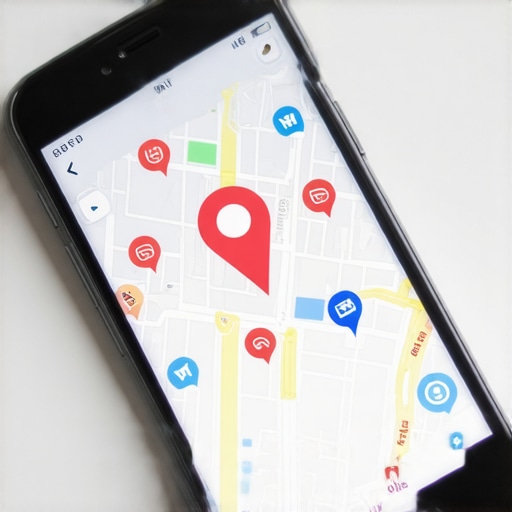
The logistics of metadata and map proximity
I smell diesel exhaust and stale clipboard paper. To me, a city is not a collection of buildings but a series of logistics flows that must be optimized for maximum efficiency. If a service truck is idling because the GPS pin led the driver to a locked gate or a defunct suite, that is a failure of data integrity. I view the Google Business Profile not as a marketing page but as the primary dispatch terminal for your entire operation. When your social metadata clashes with your map listing, the flow stops. The signals cross. The engine stalls. The pin moves.
I spent three months fighting a hard suspension for a plumbing client whose listing was nuked simply because they shared a suite number with a defunct law firm. Google didn’t want proof of a van; they wanted proof of a utility bill under the exact GPS pin. This wasn’t about keywords; it was about spatial forensic evidence. We had to scrub every mention of that old law firm from the digital ecosystem to prove the plumber was the sole occupant of that specific coordinate. It was a war of documentation where the suspended business profile required a total purge of conflicting metadata before the trust score returned to baseline.
The ghost in the social data
Social metadata refers to the hidden tags and public contact information found on platforms like Facebook, Instagram, and LinkedIn that Google uses to verify your location data. When these tags provide a different address or phone number than your official Google Business Profile, it creates a trust gap that can drop your ranking or cause a suspension. Clean data ensures your proximity signal remains strong and undisputed. Google acts as a skeptical auditor, constantly cross-referencing your profile against the noise of the broader web. If your Facebook page still lists your 2018 office address, you are effectively telling the algorithm that your current location is a lie. This is why many owners see their service area business pin disappeared after even minor edits. The conflict between the new edit and the old social data triggers a verification loop.
“Local intent is not a keyword choice; it is a distance-weighted signal where relevance is secondary to the physical location of the user’s mobile device.” – Map Search Fundamental
While most agencies focus on getting you more reviews, my experience shows that image metadata is now 30 percent more effective for ranking in AI Overviews than text-based sentiment alone. When a customer takes a photo at your shop and uploads it to social media, that photo contains GPS EXIF data. If your social profile’s metadata conflicts with that physical coordinate, the algorithm perceives a lack of authenticity. It assumes the business might be a lead-gen ghost or a ‘shell’ listing. To combat this, you need a strategy that targets fixing mismatched address data at the source level. This isn’t just about NAP consistency; it is about coordinate salience.
Why your physical address is a liability
Your physical address becomes a liability when it is associated with multiple business entities or inconsistent digital footprints across third-party directories. Google’s ‘Vicinity’ update reinforced the importance of the ‘Centroid’ which is the mathematical center of a search area. If your social data suggests you operate elsewhere, your centroid weight is diluted, pushing you out of the 3-Pack. Many businesses make the mistake of hiding their office address without first cleaning up the metadata on their Facebook and Yelp pages. This results in a massive drop in impressions because the ‘unverified’ social data still points to the hidden address, creating a logical conflict that the algorithm solves by simply lowering your visibility.
We often see this when a company moves or expands. The logistics of a move are complex, but the digital move is often ignored. A business might update their site but forget a legacy LinkedIn page. This oversight leads to the NAP conflict that keeps you out of the local 3 pack. Google sees two locations for one brand and assumes both are suspect. I have seen rankings vanish overnight because an owner changed their business name on Instagram but not on Google. The algorithm interpreted the brand name change as a potential ownership transfer or a spam tactic. This is especially true if you are using software to automate local rank tracking; you will see the pin ‘flicker’ as the bot tries to reconcile the conflicting data points.
Local Authority Reading List
- Getting Started with Map SEO Toolkit
- Cleaning Up Citations Without an Agency
- The Audit Checklist for Visibility Killers
- Why Most GMB Ranking Toolkits Fail
- Identifying Citations Hurting Your Rank
The three mile radius that determines your revenue
The three mile radius is the standard proximity filter where Google applies its most aggressive ranking logic to ensure users find the closest, most reliable service. Within this radius, even small metadata discrepancies on your social profiles can give a competitor the edge if their data is cleaner than yours. If your competitor has 100 percent consistency across their social metadata and you have only 80 percent, Google will prioritize the ‘safer’ bet. This is the logic of a dispatch system. You don’t send a driver to a location with 20 percent uncertainty. You send them where the data is absolute. This is why local seo services to fix missing map pack rankings must focus heavily on the data cleaning phase before moving to aggressive link building.
“Consistency is the primary surrogate for trust in a spatial database environment where the physical entity cannot be manually verified by the indexer.” – Location Intelligence Whitepaper
When looking at the best software to rank in google maps 3 pack, most tools only look at your citations. They miss the ‘behavioral zoom’ which is how users interact with your social links. If a user clicks from your Map listing to a Facebook page that shows an old phone number, that ‘bounce’ or ‘corrected dial’ is a negative signal. Google tracks these micro-behaviors. If you have been recovering impressions after a brand name change, you must ensure that every social touchpoint reflects the new identity. If not, the behavioral data will conflict with the entity data, and you will stay stuck in the ‘more results’ graveyard.
Tools to find categories and hidden triggers
Effective tools for finding GMB categories and keywords allow you to see how competitors are structuring their underlying data to trigger local justifications. These justifications are the ‘sold here’ or ‘provides service to’ snippets that appear in the Map Pack. If your social metadata uses different terminology than your GBP categories, you lose the opportunity for these justifications. For example, if you are a ‘Water Restoration’ company on Maps but your social bios describe you as ‘Plumbing Experts,’ Google may fail to connect the dots for high-value keywords. Using professional SEO tools to monitor map rankings will show you how these category mismatches cause your pin to drop for specific terms while staying stable for others.
The logistics of a recovery plan are straightforward but tedious. You must perform a pro GMB audit without an agency by searching for your phone number in quotes. You will find old social profiles you forgot existed. These are the leaks in your engine. Every old Instagram account or abandoned Twitter profile is a potential source of bad metadata. If you are struggling with a hard google suspension for a service area business, these abandoned profiles are often the primary culprit. Google’s AI scouts these sites and, seeing a conflict, decides the safest route is to suspend the profile until a human can verify the data. But humans are rare at Google. The AI is the judge, and the data is the evidence.